


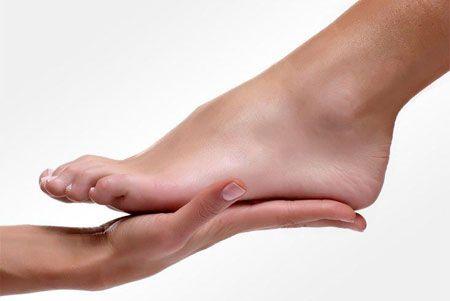
Flatfoot is a pathological condition of the foot, in which the shape of its arches changes, leading to a loss of its ability to absorb impact loads. Our foot has two arches: the longitudinal arch, which runs along the inner side (a slight bend), and the transverse arch, which is located in the area of the toes.
Why do we need these arches? Arches act as shock absorbers during walking or running, thereby reducing the load on the joints and muscles.
Flatfoot can be congenital or acquired. Congenital flatfoot is formed due to intrauterine anomalies in the development of the bone-muscle system. Acquired flatfoot can occur for the following reasons:
- Excessive weight and sedentary lifestyle.
- Pathologies of connective tissue, such as muscular dystrophy.
- Disorders of the nervous system, such as cerebral palsy and other conditions affecting innervation.
- Prolonged time spent in a cast.
- Wearing ill-fitting footwear, including narrow, small, or stiff shoes with high heels.
Important!
Most children are born with flat feet, which is considered normal, as the foot formation process begins at about 2 years of age and is completed from 6 to 8 years of age. During this period, children have their own “fatty supinator” inside the foot, which helps to cushion the walk and is responsible for foot formation.
Regarding the types of flatfoot, they differ depending on the arch where the pathology occurs:
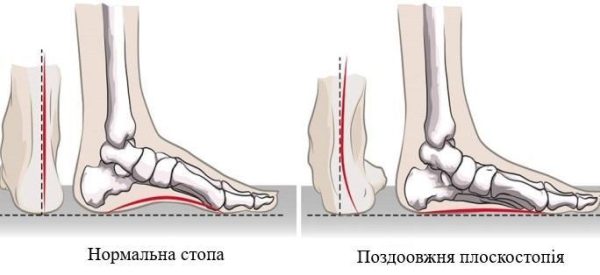
- Longitudinal flatfoot: the most common form, where the arch along the entire foot decreases, causing the foot to almost completely contact the ground surface, disrupting shock absorption and affecting the Achilles tendon, calf muscles, and knee joints.

- Transverse flatfoot: a condition where the transverse arch (near the base of the toes) becomes flattened, leading to toe deformities and arthritis of the small joints of the foot. Symptoms include callus formation in the area of arch flattening and discomfort in the front part of the foot.
- Longitudinal-transverse flatfoot: a combined type that combines symptoms of both longitudinal and transverse flatfoot.
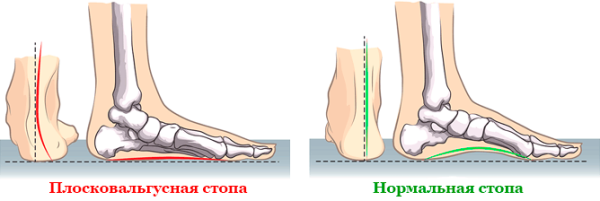
- Flat-valgus deformity of the foot: characterized by flattening and inward deviation of the foot, resulting in legs with an X-shaped appearance.
Diagnosis:
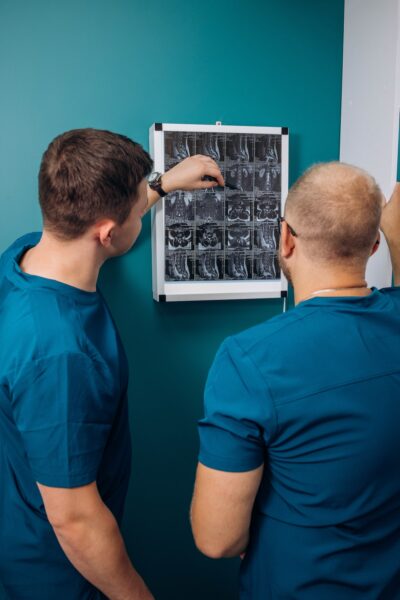
The initial stage of diagnosis includes a doctor’s consultation, primary examination, and conducting a test session. After this, the doctor makes a preliminary diagnosis and refers for additional examination methods. For flatfoot, the following examination methods are used:
- X-ray of the foot in two projections with and without load.
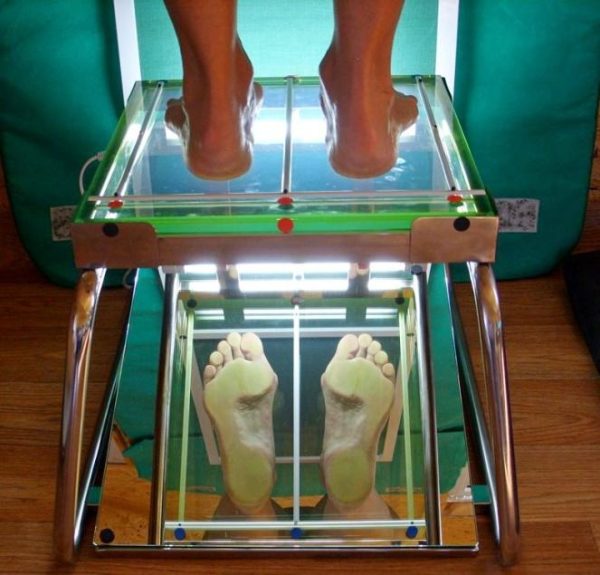
- Computerized and simple plantography, allowing to scan the footprint and determine the degree of flatfoot for individual insole selection.
- Podometry or the Friedland method to determine the index of the ratio of foot height to its length.
The most common question related to flatfoot: Can flat feet be cured with insoles? No, orthopedic insoles do not cure flatfoot but can suspend its progression and alleviate symptoms.
Treatment:
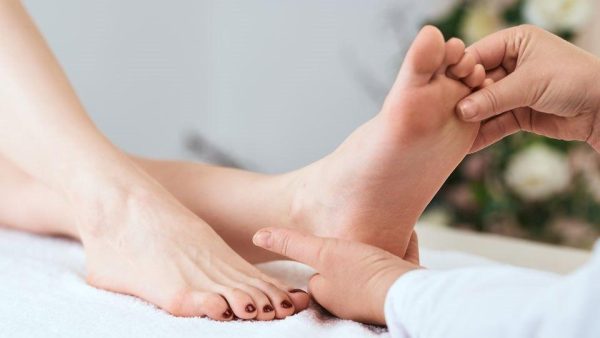
Treatment of flatfoot should begin as soon as possible after diagnosis. The main methods of treatment are physical rehabilitation and exercises aimed at relieving pain, strengthening ligaments, and foot joints. Foot massage and walking on uneven surfaces improve blood circulation and reduce swelling. If necessary, orthopedic insoles and special footwear are prescribed.
Can flatfoot be cured? Full recovery is possible only in childhood when the foot is not fully formed. In adults, it is possible to stop the process and relieve symptoms, but not achieve full recovery.
Prevention:
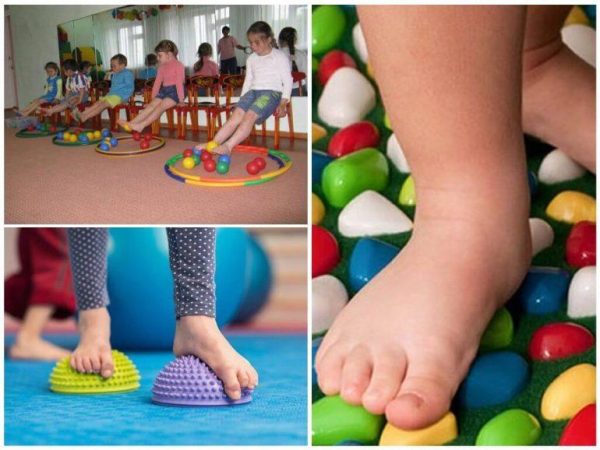
The main preventive measures include an active lifestyle, weight control, comfortable footwear, and timely treatment of injuries. It is also recommended to periodically walk barefoot on uneven surfaces to reduce foot fatigue and improve blood circulation.