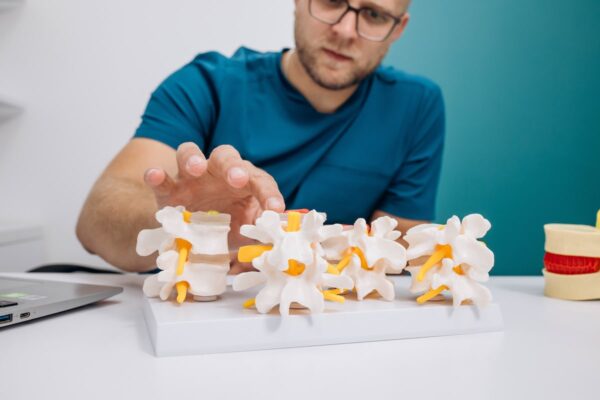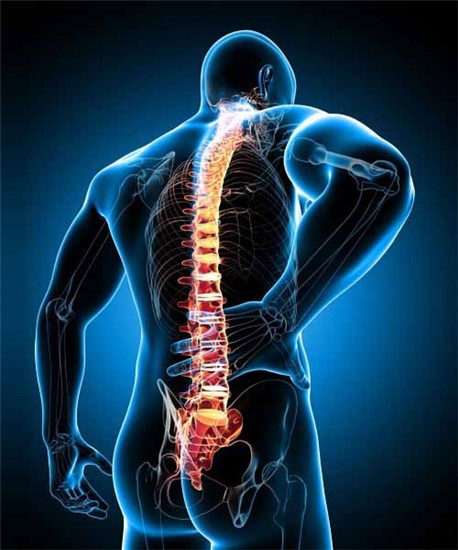


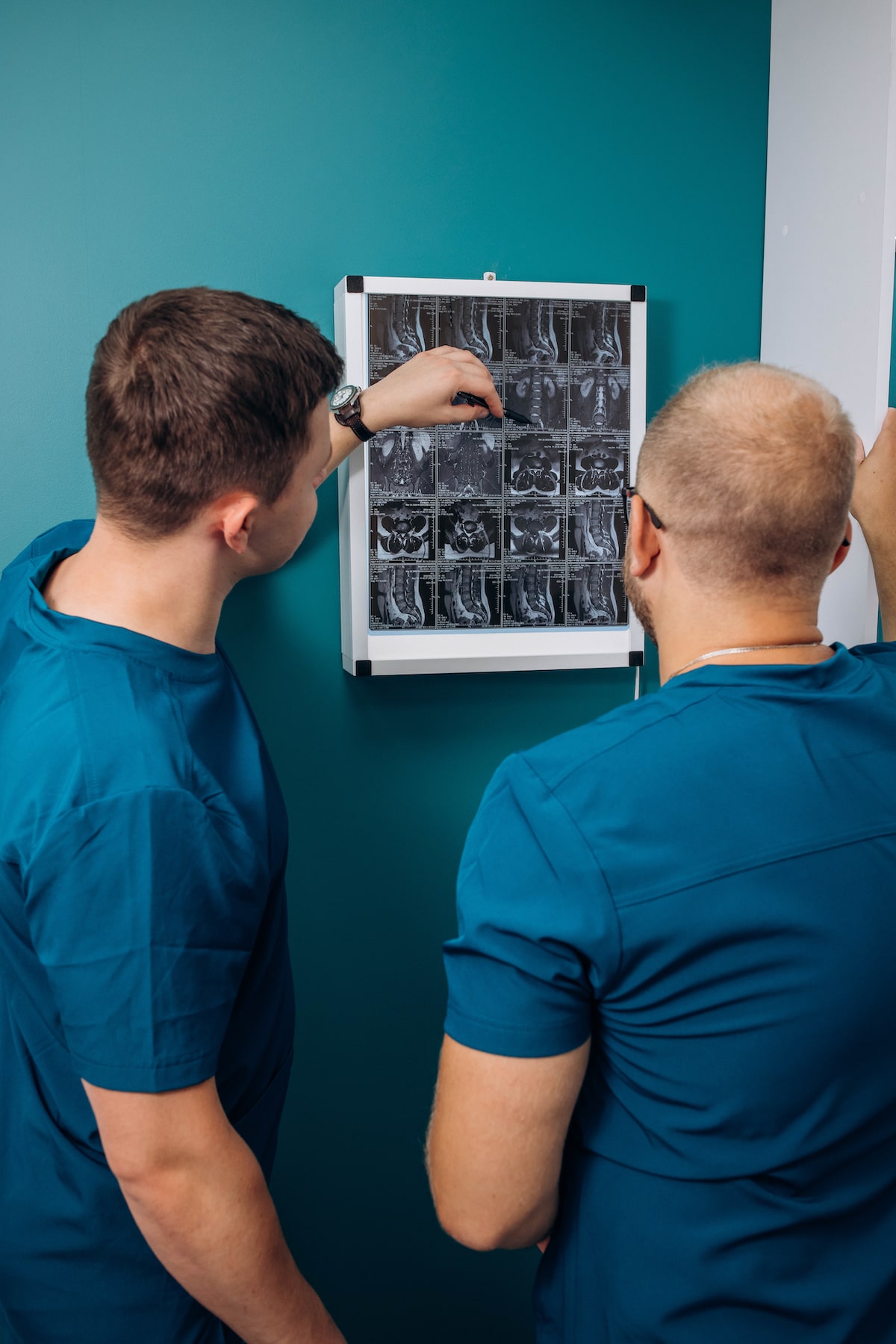
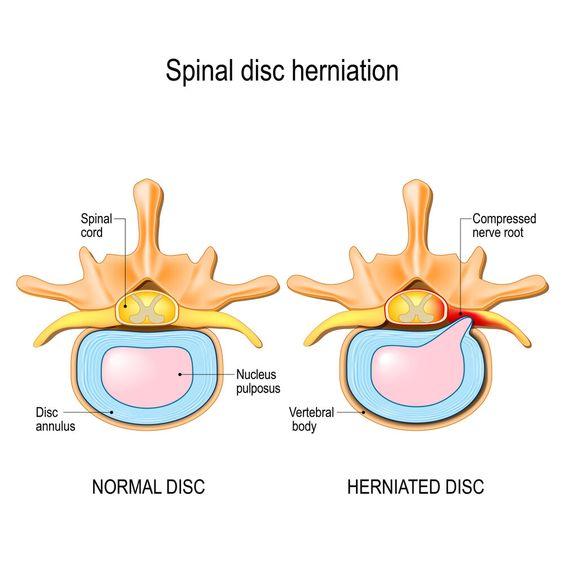
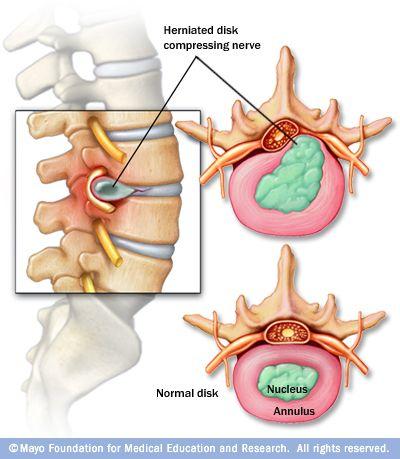
 Intervertebral hernia – a condition in which the inner part of the intervertebral disc (nucleus pulposus) protrudes beyond the outer shell (fibrous ring), accompanied by pain in the back, numbness of the limbs, and dysfunction of internal organs.
Symptoms:
In the case of a hernia of the cervical spine, there is pain in the neck, which can radiate to the arm, chest, or shoulder blade. Blood supply to the brain is disrupted, which can lead to migraines, weakness, and dizziness.
In the case of a hernia of the thoracic spine, characteristic pain occurs in the chest, between the ribs, and in the back. There may be a sensation of pain in the heart (pseudoangina).
In the case of a hernia of the lumbar spine, chronic or acute pain in the lower back is observed, which can spread to the thighs, calves, legs, and even feet. Numbness and tingling may occur in the buttocks, perineum area, and legs, as well as dysfunction of internal organs.
 Causes:
Intervertebral hernias usually occur due to degenerative-dystrophic changes in disc tissues with complicated osteochondrosis. Factors contributing to this condition include intense physical exertion, prolonged static posture, lifting heavy objects, sudden movements, excessive weight, scoliosis, anomalies in the development of the spinal column, spine injuries, and improper nutrition.
Treatment:
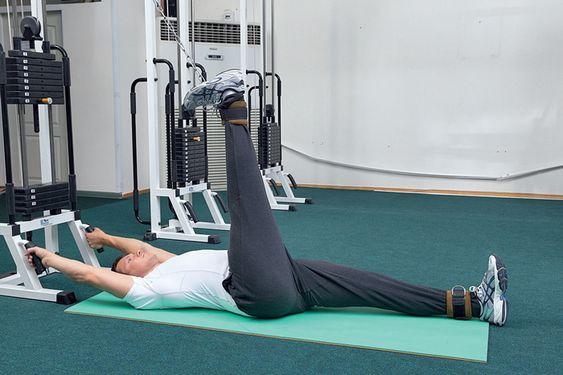
Treatment includes physical rehabilitation aimed at relaxing and stretching the muscles surrounding the affected spinal segment, followed by their strengthening. This helps not only to eliminate the consequences of the hernia but also to address its root cause – spinal instability.
Surgical treatment is also sometimes indicated, with the main indications for surgical intervention being:
- Pain in the area of the spine where the hernia is located, which is not relieved by narcotic analgesics;
- Persistent numbness of the limbs, loss of limb function;
- Dysfunction of internal organs (most often with hernia of the lumbar spine – retention, inability to urinate).
If such symptoms persist for 1-2 weeks, surgical treatment is necessary.